 Skip to content

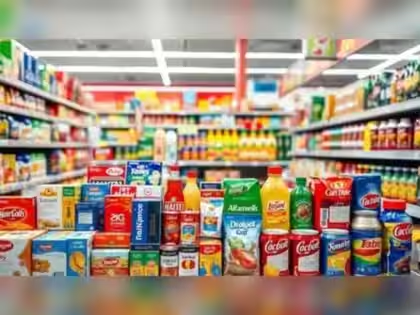
The B2B FMCG Wholesale Europe market supports thousands of retailers, wholesalers, resellers, distributors, supermarkets, hospitality businesses, and online sellers that need dependable access to fast-moving consumer goods.
Unlike consumer retail, B2B FMCG purchasing focuses on commercial quantities, repeat sourcing, wholesale pricing, product availability, logistics, documentation, and long-term supplier relationships.
For businesses operating across European markets, choosing the right wholesale partner can directly influence profitability, stock availability, customer satisfaction, and growth.
IFT Wholesale supports B2B customers looking for dependable access to beverages, coffee and tea, snacks, baby care products, ice cream, frozen products, and other FMCG categories.
This guide explains how B2B FMCG Wholesale Europe works, how retailers and resellers can choose suppliers, how to manage margins, what products to source, and how to build a more reliable wholesale purchasing strategy.
What Is B2B FMCG Wholesale?
B2B stands for Business to Business.
In FMCG wholesale, this means one company supplies fast-moving consumer goods to another company rather than selling directly to individual consumers.
Typical buyers include:
- Supermarkets
- Grocery stores
- Convenience stores
- Online retailers
- Discount retailers
- Wholesalers
- Distributors
- Hotels
- Restaurants
- Cafés
- Catering companies
- Importers
- Exporters
These businesses purchase products for resale, redistribution, commercial use, or supply to their own customers.
A strong B2B FMCG Wholesale Europe relationship can help businesses simplify purchasing while maintaining access to products that consumers buy frequently.
How B2B FMCG Wholesale Works
The structure of the FMCG supply chain can vary, but a typical model may look like this:
Manufacturer → Supplier or Wholesaler → Retailer or Distributor → Consumer
In some cases, a distributor may sit between the supplier and retailer. In other situations, a wholesaler may sell directly to supermarkets, hospitality businesses, or online stores.
The exact structure depends on:
- Product category
- Brand
- Order quantity
- Market
- Distribution agreement
- Logistics
- Business model
B2B buyers should focus less on the label used by the supplier and more on whether the company can meet their actual commercial requirements.
Why B2B FMCG Wholesale Matters
Fast-moving consumer goods are purchased repeatedly.
This makes availability extremely important.
If a retailer runs out of popular products, customers may choose another store. If a distributor cannot replenish stock quickly enough, its own customers may look for alternative suppliers.
A reliable B2B FMCG Wholesale Europe partner can help businesses improve:
- Product availability
- Inventory planning
- Supplier relationships
- Procurement efficiency
- Wholesale pricing
- Category variety
- Customer satisfaction
- Long-term growth
This is why wholesale sourcing should be treated as a strategic business decision.
Main FMCG Categories for B2B Buyers
B2B buyers often source products across several categories rather than relying on one narrow product group.
IFT Wholesale provides commercial sourcing opportunities across important FMCG categories.
Wholesale Beverages
Beverages are one of the largest FMCG categories and can generate consistent demand across retail and hospitality sectors.
Products may include:
- Soft drinks
- Bottled water
- Juices
- Energy drinks
- Sports drinks
- Carbonated beverages
- Other packaged drinks
Businesses interested in this category can explore our Wholesale Beverages Europe range.
Wholesale Coffee and Tea
Coffee and tea are everyday products purchased by households, offices, hotels, restaurants, supermarkets, and cafés.
Products may include:
- Coffee beans
- Ground coffee
- Instant coffee
- Espresso products
- Black tea
- Green tea
- Herbal tea
- Fruit tea
- Speciality tea
Our Wholesale Coffee and Tea Europe range supports B2B customers looking for dependable hot beverage sourcing.
Wholesale Snacks
Snack products are fast-moving and can perform strongly across supermarkets, convenience stores, hospitality businesses, and online retail.
Categories may include:
- Crisps
- Chips
- Biscuits
- Cookies
- Chocolate
- Confectionery
- Healthy snacks
- Grab-and-go products
Explore our Wholesale Snacks Europe category for more information.
Wholesale Baby Care Products
Baby care is an important FMCG sector with strong repeat-purchase behaviour.
Products may include:
- Baby formula
- Baby food
- Diapers
- Baby wipes
- Baby toiletries
- Baby skincare
- Infant care products
Businesses can explore Wholesale Baby Care Products Europe for additional sourcing opportunities.
Wholesale Ice Cream and Frozen Products
Frozen products can offer strong opportunities for retailers and food service businesses.
Products may include:
- Ice cream
- Family tubs
- Multipacks
- Frozen desserts
- Gelato
- Sorbet
- Individual frozen treats
Businesses with suitable frozen storage can explore Wholesale Ice Cream Europe.
Who Uses B2B FMCG Wholesale?
The B2B FMCG market serves many different types of commercial buyers.
Each has different requirements.
B2B FMCG Wholesale for Retailers
Retailers purchase products for resale to end consumers.
Examples include:
- Supermarkets
- Convenience stores
- Grocery stores
- Discount stores
- Independent shops
- Online stores
Retailers need to balance:
- Product demand
- Shelf space
- Purchase price
- Retail margin
- Inventory turnover
- Product availability
- Competition
A reliable wholesale partner can help retailers maintain a broader product selection without managing too many individual supplier relationships.
B2B FMCG Wholesale for Resellers
Resellers may purchase products and then sell them through:
- Physical stores
- Online shops
- Marketplaces
- Social commerce
- Specialist retail channels
Resellers need to pay close attention to total costs because their margins may be affected by:
- Wholesale purchase price
- Marketplace fees
- Payment processing
- Shipping
- Storage
- Packaging
- Returns
A strong B2B FMCG Wholesale Europe sourcing strategy helps resellers identify products that are commercially viable rather than simply popular.
B2B FMCG Wholesale for Distributors
Distributors usually purchase larger quantities because they may supply multiple retailers or commercial customers.
Their priorities often include:
- Larger order quantities
- Reliable replenishment
- Competitive pricing
- Strong supplier relationships
- Efficient logistics
- Consistent product availability
Businesses interested in this area should also read our FMCG Distributors Europe guide.
B2B FMCG Wholesale for Hospitality Businesses
Hotels, restaurants, cafés, and catering companies often require recurring FMCG supplies.
Common products include:
- Coffee
- Tea
- Beverages
- Snacks
- Frozen desserts
- Packaged foods
- Guest products
Hospitality buyers may use products internally rather than reselling them in original packaging, but dependable supply remains essential.
What Retailers Should Look for in a B2B FMCG Supplier
Choosing the right wholesale partner involves more than comparing prices.
Retailers should evaluate several factors carefully.
1. Product Range
A broad product portfolio can make procurement easier.
Businesses may prefer to source:
- Beverages
- Snacks
- Coffee
- Tea
- Baby care
- Frozen products
- Other FMCG items
through fewer trusted suppliers.
This can reduce administration and make account management more efficient.
2. Reliable Stock Availability
Fast-moving goods require regular replenishment.
Repeated stock shortages can lead to:
- Missed sales
- Customer frustration
- Lower repeat purchases
- Increased competitor sales
A dependable B2B FMCG Wholesale Europe supplier should provide clear information about stock and available quantities whenever possible.
3. Commercial Pricing
B2B buyers need pricing that supports their business model.
However, low wholesale pricing alone is not enough.
Businesses should also consider:
- Logistics
- Storage
- Product shelf life
- Order quantities
- Payment costs
- Resale value
- Customer demand
The best supplier relationship provides strong overall commercial value.
4. Recognised Brands
Recognised brands can help retailers sell products more easily because consumers may already trust them.
Benefits can include:
- Existing demand
- Product familiarity
- Repeat purchasing
- Brand recognition
- Stronger shelf appeal
However, retailers should still select brands according to local market demand.
Not every successful product performs equally well in every European market.
5. Supplier Communication
Professional communication is especially important in B2B transactions.
Buyers may need support with:
- Product enquiries
- Stock availability
- Pricing
- Quotations
- Orders
- Documents
- Logistics
Poor communication can create delays and uncertainty even when products are attractively priced.
6. Minimum Order Requirements
B2B suppliers may require minimum order quantities or minimum order values.
These can vary by:
- Product
- Brand
- Case quantity
- Pallet quantity
- Order size
- Destination
Retailers should ensure that minimums match their realistic sales volumes and storage capacity.
7. Product Shelf Life
Shelf life is especially important for FMCG food and beverage products.
Businesses should review:
- Best-before dates
- Expiration dates
- Storage conditions
- Expected turnover
- Existing stock
Large quantities should only be purchased when they can realistically be sold or used within the appropriate timeframe.
B2B FMCG Wholesale and Profit Margins
Profit margin is one of the most important considerations for retailers and resellers.
The wholesale price is only one part of the calculation.
Businesses should also consider:
- Shipping
- Storage
- Packaging
- Marketplace fees
- Taxes
- Payment processing
- Promotions
- Returns
- Product losses
A product with a low wholesale cost may still provide poor margins after these expenses are included.
This is why careful cost analysis should be part of every B2B sourcing decision.
How to Compare FMCG Wholesale Offers
When comparing wholesale offers, businesses should look at the complete commercial package.
Consider:
Unit Cost
What is the actual purchase price?
Quantity
How much must be purchased?
Pack Size
Is the format appropriate for the target market?
Shelf Life
Can the products be sold in time?
Logistics
How will products be transported and stored?
Demand
Is there genuine customer interest?
Supplier Reliability
Can future orders be supported?
This process helps businesses avoid making decisions based purely on headline pricing.
B2B FMCG Wholesale Online
Businesses increasingly search for B2B FMCG wholesale online because digital platforms make supplier discovery easier.
Online sourcing can help buyers:
- Research suppliers
- Compare categories
- Discover products
- Submit wholesale enquiries
- Expand into new markets
However, businesses should still perform normal due diligence.
Verify:
- Company information
- Contact details
- Product information
- Commercial terms
- Support options
- Supplier transparency
Online convenience should support professional purchasing, not replace it.
How Retailers Can Improve FMCG Purchasing
Retailers can improve their sourcing strategy by creating a more structured purchasing process.
Analyse Customer Demand
Use actual sales data whenever possible.
Review Stock Levels
Avoid buying products that are already overstocked.
Compare Suppliers
Evaluate more than price.
Forecast Demand
Consider both normal and seasonal purchasing patterns.
Calculate Margins
Include all relevant costs.
Monitor Product Performance
Review which products sell quickly and which remain in stock.
This approach helps retailers make more informed purchasing decisions.
B2B FMCG Wholesale for E-Commerce Sellers
E-commerce sellers can use B2B wholesale to build product catalogues without manufacturing products themselves.
Potential categories include:
- Branded beverages
- Snacks
- Coffee
- Tea
- Baby care
- Packaged foods
Online sellers should pay particular attention to:
- Shipping costs
- Packaging
- Marketplace fees
- Inventory
- Fulfilment
- Product information
The best wholesale products for e-commerce are not always the products with the lowest purchase price.
They are products that combine demand, viable margins, manageable logistics, and reliable supply.
Bulk Purchasing in B2B FMCG
Many B2B businesses purchase products in larger quantities.
Bulk buying can help improve:
- Inventory availability
- Purchasing efficiency
- Order frequency
- Commercial pricing opportunities
However, large quantities create additional responsibilities.
Businesses should evaluate:
- Sales demand
- Storage capacity
- Shelf life
- Working capital
- Product turnover
- Logistics
Our Buy FMCG Products in Bulk Europe guide explains this process in greater detail.
Working with FMCG Suppliers
Strong supplier relationships can become valuable business assets.
Businesses can improve communication by providing suppliers with clear information.
When making an enquiry, include:
- Business type
- Product category
- Preferred brands
- Approximate quantities
- Destination
- Purchasing frequency
This makes it easier for suppliers to understand the requirement and respond efficiently.
For more information about evaluating suppliers, read our FMCG Supplier Europe guide.
FMCG Wholesale vs Distribution
Wholesale and distribution can overlap, but they are not always identical.
A wholesaler may source products from multiple brands and resell them to businesses.
A distributor may work more closely with specific manufacturers or brands.
For buyers, practical questions matter more than terminology:
- Are the products available?
- Are quantities suitable?
- Is pricing commercially viable?
- Can repeat orders be supported?
- Can logistics be managed?
- Is communication reliable?
This is the foundation of a successful B2B relationship.
Cross-Border B2B FMCG Wholesale in Europe
European businesses may source products from suppliers located in different markets.
Cross-border sourcing can create opportunities to access:
- Additional brands
- Broader product ranges
- Alternative suppliers
- New retail opportunities
However, buyers should also consider:
- Labelling
- Documentation
- Food safety
- Packaging
- Transport
- Storage
- Taxation
- Destination requirements
Rules vary depending on the product and market.
Businesses should verify the requirements that apply to each transaction.
For official information relating to food products, consult the European Commission Food Safety resources.
Common B2B FMCG Purchasing Mistakes
Businesses can reduce sourcing risk by avoiding several common mistakes.
Buying Too Much Stock
Large quantities can tie up cash and warehouse space.
Choosing Products Without Demand
Products should match genuine customer needs.
Focusing Only on Price
Service, logistics, stock, and reliability also matter.
Ignoring Shelf Life
This can create avoidable losses.
Neglecting Total Costs
Shipping, storage, fees, and other expenses affect profitability.
Working with Unclear Suppliers
Professional communication and transparency are essential.
How to Build a Strong B2B FMCG Supply Strategy
A stronger B2B strategy can be built around several simple principles.
Choose Products Based on Demand
Let customer behaviour guide purchasing.
Build Reliable Supplier Relationships
Consistency is valuable in fast-moving categories.
Maintain Appropriate Stock
Avoid both shortages and unnecessary excess inventory.
Track Commercial Performance
Monitor margins, turnover, and repeat sales.
Diversify Carefully
Expand into complementary FMCG categories where there is demand.
Review Suppliers Regularly
Make sure commercial relationships continue to meet business needs.
This creates a more resilient wholesale operation.
Why Choose IFT Wholesale for B2B FMCG?
IFT Wholesale supports businesses seeking FMCG sourcing opportunities across European markets.
Our wholesale categories include:
- Beverages
- Coffee and tea
- Snacks
- Baby care products
- Ice cream
- Frozen products
- Other FMCG products
Businesses can benefit from:
- Multiple FMCG categories
- Recognised consumer brands
- Professional B2B support
- Wholesale sourcing opportunities
- Competitive commercial options
- Reliable product sourcing
- Long-term business relationships
Whether you operate a supermarket, retail store, wholesale company, distribution business, hospitality company, or online shop, our team can discuss your product sourcing requirements.
How to Start a B2B FMCG Enquiry
Before contacting a wholesale supplier, prepare basic information about your business requirements.
Include:
- Product categories
- Preferred brands
- Required quantities
- Business type
- Destination market
- Purchasing frequency
This information can make the quotation and sourcing process more efficient.
Businesses interested in working with IFT Wholesale can visit the Contact Us page to discuss available products and wholesale opportunities.
Related Blog Posts:
Buy FMCG Products in Bulk Europe
Frequently Asked Questions
1. What is B2B FMCG wholesale?
B2B FMCG wholesale involves one business supplying fast-moving consumer goods to another business. Typical buyers include retailers, supermarkets, wholesalers, distributors, hospitality businesses, and online sellers.
2. Which products are commonly sold through B2B FMCG wholesale?
Common categories include beverages, coffee, tea, snacks, confectionery, baby care products, frozen foods, packaged foods, personal care items, household products, and other frequently purchased consumer goods.
3. How do retailers choose a B2B FMCG supplier?
Retailers should compare suppliers based on product range, brand selection, stock availability, wholesale pricing, minimum quantities, logistics, communication, documentation, and long-term reliability.
4. Can online retailers use B2B FMCG wholesale?
Yes. E-commerce retailers can source FMCG products through wholesale suppliers, but they should calculate shipping, storage, marketplace fees, packaging, fulfilment, and other costs before selecting products.
5. Does IFT Wholesale work with B2B customers across Europe?
IFT Wholesale supports commercial customers seeking FMCG sourcing opportunities for European markets. Businesses can contact the company with their product requirements, quantities, and destination information to discuss available wholesale options.
Within the cross-border wholesale section, include an authoritative external reference to:
European Commission – Food Safety
This gives business buyers access to official European information regarding food safety and related requirements.
Final Thoughts
The B2B FMCG Wholesale Europe market offers significant opportunities for retailers, resellers, distributors, hospitality businesses, wholesalers, and e-commerce companies that need reliable access to fast-moving consumer goods.
Successful B2B sourcing depends on more than finding low wholesale prices.
Businesses should evaluate:
- Customer demand
- Product range
- Supplier reliability
- Stock availability
- Commercial pricing
- Shelf life
- Logistics
- Total costs
- Profit margins
IFT Wholesale supports commercial customers seeking beverages, coffee and tea, snacks, baby care products, ice cream, frozen products, and other FMCG categories across European markets.
By connecting this guide with our FMCG Wholesale Europe, FMCG Supplier Europe, FMCG Distributors Europe, and Buy FMCG Products in Bulk Europe resources, businesses can develop a clearer understanding of the complete wholesale sourcing process.
Whether you operate a retail store, supermarket, distribution company, wholesale business, hospitality operation, or online store, IFT Wholesale can help you explore dependable B2B FMCG Wholesale Europe sourcing opportunities and build stronger long-term supply relationships.
